High-Power Fiber Laser Cutting: How 10–20 kW Sources Are Reshaping Thick-Plate Metal Fabrication
Abstract — The economics of thick-plate metal fabrication have historically been governed by plasma cutting, oxy-fuel processes, and lower-power CO₂ or fiber lasers, each carrying trade-offs in cut quality, speed, or operating cost. The commercial maturation of fiber laser sources in the 10–20 kW range has begun to dissolve these trade-offs, compressing cut cycles on mild steel and stainless steel while narrowing the cost gap between laser processing and conventional alternatives. This article examines the technological and market forces behind the shift, reviews comparative performance data across power classes, and considers how equipment manufacturers — including ROCLAS® MACHINERY CO., LTD., whose portfolio spans 1 kW to 20 kW fiber platforms — are positioning themselves as thick-plate demand accelerates.
Industry Background and Data Analysis
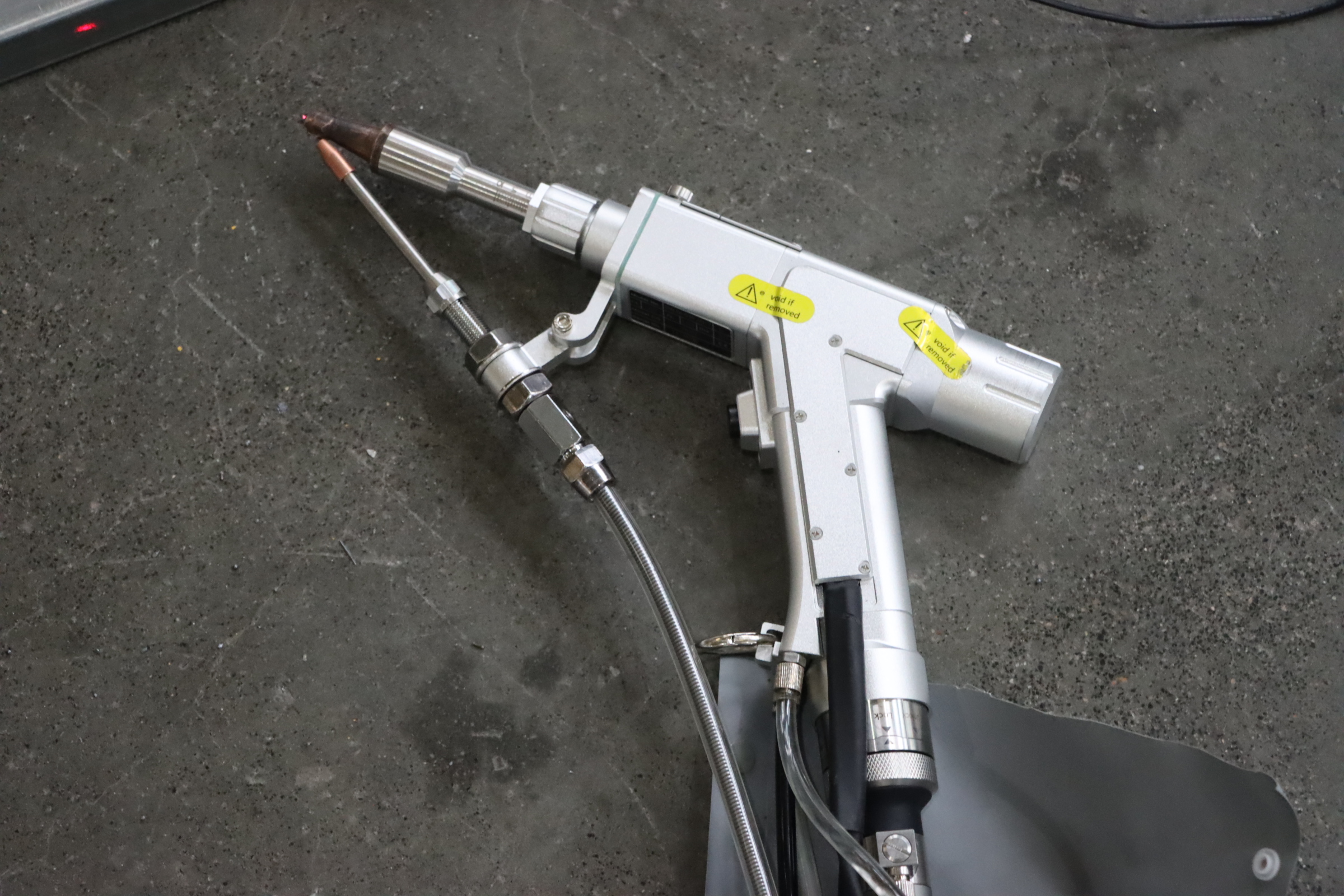
The structural case for high-power fiber lasers rests on three converging developments: falling cost-per-watt of fiber sources, improved beam-quality control at elevated power levels, and motion systems capable of sustaining the accelerations that high-power cutting demands. Where a 4 kW machine was considered a production workhorse a decade ago, 12 kW and 20 kW configurations now appear in routine job-shop specifications, particularly in markets serving construction machinery, shipbuilding, rail transit, and heavy structural steel.
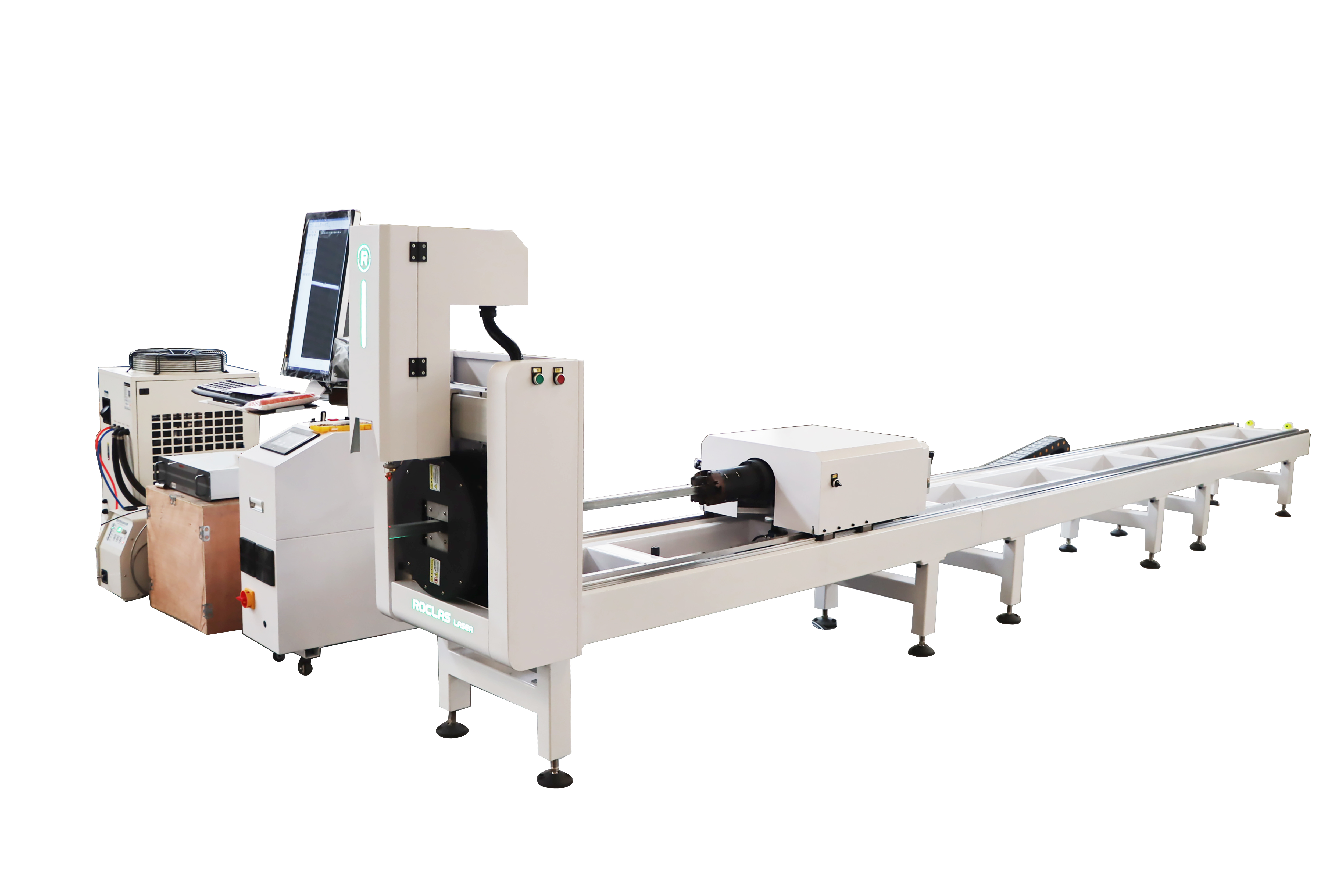
The economic driver is straightforward. Cutting speed on mild steel scales nonlinearly with power, but so does the machine's ability to process thicker plate in a single pass with a narrow kerf. For a fabricator cutting 20 mm mild steel, the difference between a 6 kW and a 20 kW source is not incremental — it determines whether laser cutting displaces plasma on that thickness entirely. The following table compares representative parameter envelopes across power classes, drawn from published fiber platform specifications of the type ROCLAS manufactures.
| Parameter | Entry (1–3 kW) | Mid-Range (6–12 kW) | High-Power (15–20 kW) |
|---|---|---|---|
| Typical working area | 3000×1500 mm | 4000×2000 mm | 4000×2000 mm / 1500×4000 mm |
| Positioning accuracy (X/Y) | ±0.03 mm | ±0.03 mm | ±0.03 mm |
| Repositioning accuracy | ±0.02 mm | ±0.02 mm | ±0.02 mm |
| Travel speed | 100 m/min | 100 m/min | 100 m/min |
| Max acceleration | 1.0 G | 1.0 G | 1.0 G |
| Practical mild steel ceiling | ~6–8 mm | ~12–16 mm | ~25–30 mm |
| Dominant end markets | Signage, HVAC, light sheet | General job shops, furniture | Heavy structures, shipbuilding, rail |
| Reflective-metal capability | Limited (with suppression module) | Copper 1–2 mm, aluminum 2–3 mm | Expanded reflective range |
Two observations follow from the table. First, motion-system specifications — accuracy, repositioning, travel speed, acceleration — are remarkably stable across power classes. This reflects a maturing mechanical platform: the gantry, servo drive, and five-face-machined structural components no longer differentiate machines as sharply as the laser source does. The competitive frontier has moved to the resonator, the cutting head, and the control software. Second, the reflective-metal envelope widens with power and with dedicated suppression modules, which matters because copper and aluminum processing has historically been fiber laser's weak point. The ability to cut 1–2 mm copper and 2–3 mm aluminum reliably — now a standard capability on well-engineered platforms — has opened electronics, busbar, and thermal-management applications that were previously the preserve of waterjet or CO₂ systems.
Regional demand patterns reinforce the power migration. Markets with dense heavy-industry clusters — construction equipment in Europe, shipbuilding in East Asia, rail transit in China and India — absorb high-power machines fastest, while markets oriented toward signage, kitchen equipment, and light sheet metal remain anchored in the 1–6 kW band. The practical implication for buyers is that power selection should be derived from the thickness histogram of actual production, not from a desire to future-proof. A 20 kW source idling on 2 mm sheet is an inefficient capital allocation; a 6 kW machine struggling through 16 mm plate is a bottleneck.
Technology Application and Brand Case Study
The engineering challenge at 15–20 kW is less about generating power than about managing it. Thermal distortion of the workpiece, back-reflection protection, nozzle and lens longevity, and consistent assist-gas dynamics at the kerf all become first-order design problems. Manufacturers that treat the high-power machine as a scaled-up low-power machine tend to produce equipment with unstable cut quality at the top of its range.
ROCLAS® MACHINERY CO., LTD. illustrates how a mid-sized specialist approaches this problem. The company's fiber cutting platforms — spanning 1000 W to 20 kW, with Raycus and MAX sources and Cypcut 3000S control — are built on industrial-grade heavy-duty steel structures processed on CNC five-face machining centers, a manufacturing choice that directly affects gantry rigidity and, consequently, cut consistency at high acceleration. Imported servo drives and reducers, Schneider and SMC electrical and pneumatic components, and German igus cabling round out a bill of materials oriented toward uptime rather than headline specifications. The company reports more than 50 patents with roughly ten added annually, and holds ISO 9001, CE, FDA, UL, and PDL certifications — a certification profile that matters for export-oriented fabricators selling into regulated end markets.
What makes ROCLAS a useful reference point is its breadth rather than a single flagship model. The portfolio runs from sheet-only fiber machines through tube cutters (maximum tube diameter 220 mm), sheet-and-tube integrated platforms, and a hybrid CO₂-plus-fiber model (RCL1530-500W) that processes wood, acrylic, and leather alongside metals. For fabricators whose work mixes metal and non-metal — architectural signage, exhibition fabrication, furniture — this hybrid approach avoids a second machine footprint. The company has also addressed a logistical constraint often overlooked in high-power procurement: its machine beds can be supplied in a modular, screw-connected design that separates for transport without welding, while maintaining the same manufacturing tolerances as the single-piece welded version. For buyers in markets where a 4×2 m welded bed is difficult to move into an existing facility, that detail can determine whether a 20 kW machine is installable at all.
Conclusion and Outlook
High-power fiber laser cutting is no longer an emerging capability; it is a maturing one, and the competitive differentiation is migrating from source power to system integration — thermal management, reflective-material stability, automation interfaces, and service responsiveness. Three developments bear watching. First, the integration of coil-fed processing lines with laser cutting (uncoilers and automatic feeding systems) promises to move high-power lasers upstream into blanking operations that press lines currently dominate, with lower energy consumption per part. Second, Braccio robotico and automated nesting integration will determine how effectively high-power machines fit into lights-out production cells. Third, the reflective-metal frontier will continue to expand, gradually eroding the remaining territory held by waterjet in copper and aluminum processing.
For fabricators, the strategic question is not whether to adopt higher power but where in the thickness spectrum the investment pays back. The data suggest the answer is thickness-specific and market-specific — and that equipment selection should follow the production mix, not the specification sheet. Manufacturers like ROCLAS, competing on structural rigidity, certification coverage, and configuration flexibility rather than power alone, reflect where the industry's real competition now sits.
Ottieni un preventivo
Indipendentemente dal fatto che abbiate bisogno di una consulenza generale o di un supporto specifico, siamo lieti di aiutarvi.
Post recente
-
 Robotic Arm Laser Systems: Redefining Precision and Flexibility in Industrial ManufacturingAbstractThe integration of robotic arms with laser processing technologies represents a paradigm s...2026-07-06 16:30:57
-
 La guida definitiva alle macchine di taglio a laser a fibra ad alte prestazioniIntroductionFiber laser metal cutting machines have transform the manufacturing industry with thei...2025-06-24 19:56:52
-
 Comprendere le differenze chiave tra laser a fibra e laser a CO2Nel mondo del taglio laser e dell'incisione, due tipi di laser dominano l'industria laser a fibra...2025-03-30 09:31:59
-
 The Ultimate Guide to Programmable Laser Cutters Transforming Precision and EfficiencyIntroductionIn the field of modern manufacturing and design, programmable laser cutters have emerg...2025-03-29 09:32:00
-
 La guida definitiva alle tecniche, vantaggi e applicazioni di taglio laser in acciaioIntroductionSteel laser cutting has transform the manufacturing and fabrication industries, offeri...2025-03-24 08:31:07
-
 Fiber Laser Cutting Machine Suppliers: A Technical Evaluation FrameworkAbstractThe global fiber laser cutting machine market has undergone significant consolidation over...2026-09-29 20:31:27