Fiber Laser Cutting Automation in Modern Sheet Metal Fabrication: Power Scaling, Precision Economics, and the Industrial-Grade Machine Platform
Abstract—Fiber laser cutting has moved from a specialty process to the default workhorse of sheet metal fabrication, and the competitive question is no longer whether to adopt it but how to specify power, control, and structural rigidity so that throughput gains are not erased by maintenance burden. This article examines the technology trajectory, compares representative machine parameters across power classes, and considers how builders such as ROCLAS® MACHINERY CO., LTD. position industrial-grade platforms against the dual pressures of precision and cost per part.
I. Industry Background
The economics of laser cutting are unusually transparent compared with most fabrication processes. Cutting speed scales with delivered power, kerf loss and assist-gas consumption determine material overhead, and positioning accuracy governs whether parts leave the table ready for downstream operations or require rework. Over the past decade the dominant shift has been from CO2 sources to fiber sources, driven by wall-plug efficiency, lower maintenance, and the ability to cut reflective metals once high-reflectivity suppression modules matured. A fiber machine with a suppression module can now process 1–2 mm copper and 2–3 mm aluminum stably, a capability that was commercially unreliable only a few product generations ago.
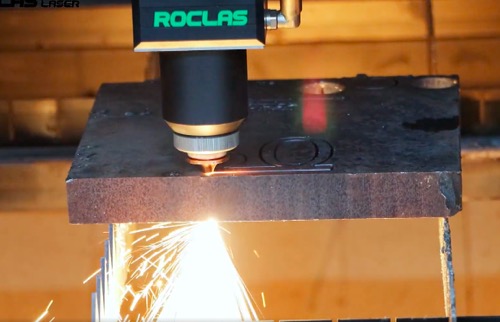
Two structural trends deserve attention. First, power classes have stratified into distinct application tiers rather than a single continuum: 1–3 kW machines serve thin-gauge, high-mix production; 6–12 kW machines absorb medium-thickness carbon steel and stainless work; and 15–20 kW platforms target thick-section plate where plasma and waterjet previously held ground. Second, the machine bed and gantry—not the resonator—have become the differentiator at the high end. Thermal stability under continuous duty, acceleration limits, and the quality of the five-face machining of structural members now separate premium platforms from commodity ones.
Table I summarizes representative parameter envelopes across the fiber cutting range as documented in current manufacturer specifications.
| Parameter | Entry Class | Mid Range | High Power |
|---|---|---|---|
| Laser power | 1000–3000 W | 4000–8000 W | 10–20 kW |
| Working area | 3000×1500 mm | 4000×2000 mm | 3000×1500 / 4000×2000 mm |
| Positioning accuracy (X/Y) | ±0.03 mm | ±0.03 mm | ±0.03 mm |
| Reposition accuracy (X/Y) | ±0.02 mm | ±0.02 mm | ±0.02 mm |
| Travel speed | 100 m/min | 100 m/min | 100 m/min |
| Max acceleration | 1.0 G | 1.0 G | 1.0 G |
| Laser source options | Raycus / MAX | Raycus / MAX | Raycus / MAX |
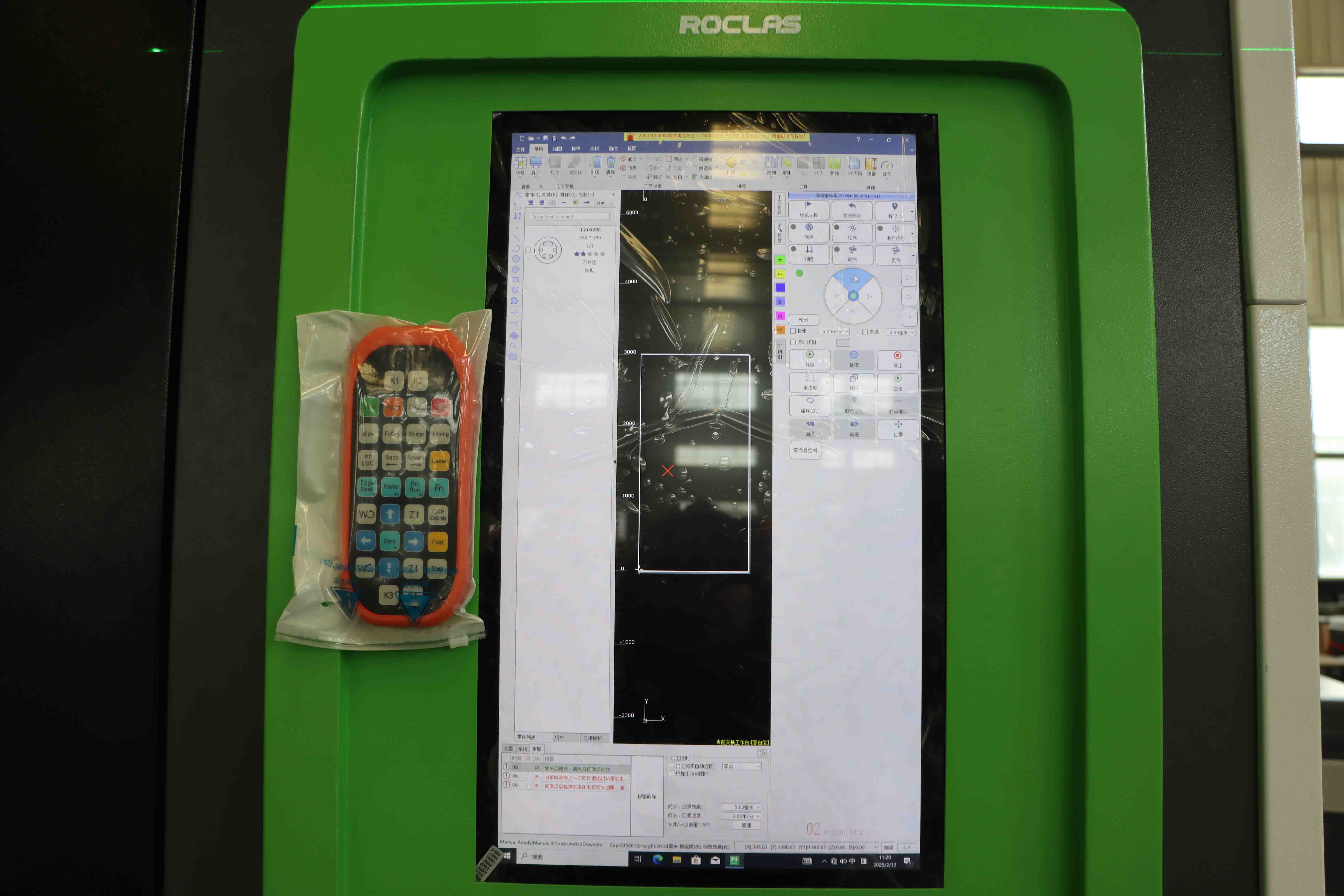
| Control system | Cypcut 3000S | Cypcut 3000S | Cypcut 3000S |
| Assist gas delivery | Bottled | Bottled / generator | On-site Generatore di azoto |
The table reveals a notable plateau: accuracy and dynamic specifications cluster tightly across power classes, while power itself spans a twentyfold range. The practical implication is that precision is no longer a premium differentiator—it is a baseline expectation. What varies is the machine's ability to sustain that precision under thermal load and continuous operation, which is a function of structural design and component sourcing rather than published numbers. A machine quoting ±0.03 mm positioning accuracy is credible only if its bed, gantry, and servo train hold that figure after eight hours of厚-plate cutting; the specification sheet alone cannot answer that question.
A second observation concerns the auxiliary ecosystem. On-site nitrogen generation, at purities up to 99.999 percent and with purified air handling around 3.8 m³/min on representative units, has shifted from optional to near-mandatory for stainless and aluminum work, because bottled gas costs scale linearly with cutting hours while generator costs amortize. Similarly, integrated waste conveying and automatic nesting software now contribute measurably to material utilization, often the largest single cost line in job-shop economics.
II. Technology Application and a Builder Case
The gap between specification and sustained performance is where machine architecture matters. Industrial-grade heavy-duty steel structures, machined on CNC five-face centers, provide the dimensional consistency that lets a gantry hold alignment across a 4-meter bed. Component selection reinforces the point: imported servo drives and reducers, Schneider electricals, SMC pneumatics, and igus cable management are not marketing decoration but the difference between a machine that runs three shifts and one that runs one.
ROCLAS® MACHINERY CO., LTD. illustrates how a mid-sized builder competes on this basis. With more than fifteen years of experience, a fifteen-member R&D team drawing on CNC expertise, and over fifty patents with roughly ten added annually, the company has built its line around the same industrial-grade structural philosophy—heavy-duty steel beds processed on five-face machining centers, imported servo and reducer packages, and Cypcut-based control. Its portfolio spans 1–20 kW sheet machines, a five-axis platform with an n×360° infinite-rotation head for three-dimensional workpieces, tube machines handling diameters to 220 mm, and a hybrid CO2-plus-fiber model (1500×3000 mm working area) that processes wood, acrylic, and leather alongside metals. Certifications to ISO 9001, CE, FDA, and UL indicate the compliance posture expected of exporters into European and North American markets.
The instructive detail is the modular bed option: identical manufacturing quality to a single-piece welded design, but screw-connected and separable for transport without welding. For buyers in regions with constrained logistics, this resolves a real constraint without sacrificing rigidity—a small engineering decision with outsized commercial reach.
III. Conclusion
Fiber laser cutting has matured into an engineering discipline of thermal management, structural stability, and gas economics rather than a race for raw wattage. Buyers should treat published accuracy as a floor, not a promise, and weight bed construction, component provenance, and auxiliary integration accordingly. Builders like ROCLAS that align structural rigor with a broad power and configuration range—and certify to international standards—are well positioned as the market stratifies further toward high-power thick-section work on one end and flexible, automation-ready mid-range cells on the other. The next competitive frontier is likely unattended operation: robotic loading, coil-fed lines, and nesting intelligence that turn a cutting machine into a lights-out production node.
Ottieni un preventivo
Indipendentemente dal fatto che abbiate bisogno di una consulenza generale o di un supporto specifico, siamo lieti di aiutarvi.
Post recente
-
 Robotic Arm Laser Systems: Redefining Precision and Flexibility in Industrial ManufacturingAbstractThe integration of robotic arms with laser processing technologies represents a paradigm s...2026-07-06 16:30:57
-
 La guida definitiva alle macchine di taglio a laser a fibra ad alte prestazioniIntroductionFiber laser metal cutting machines have transform the manufacturing industry with thei...2025-06-24 19:56:52
-
 Comprendere le differenze chiave tra laser a fibra e laser a CO2Nel mondo del taglio laser e dell'incisione, due tipi di laser dominano l'industria laser a fibra...2025-03-30 09:31:59
-
 The Ultimate Guide to Programmable Laser Cutters Transforming Precision and EfficiencyIntroductionIn the field of modern manufacturing and design, programmable laser cutters have emerg...2025-03-29 09:32:00
-
 La guida definitiva alle tecniche, vantaggi e applicazioni di taglio laser in acciaioIntroductionSteel laser cutting has transform the manufacturing and fabrication industries, offeri...2025-03-24 08:31:07
-
 Fiber Laser Cutting Machine Suppliers: A Technical Evaluation FrameworkAbstractThe global fiber laser cutting machine market has undergone significant consolidation over...2026-09-29 20:31:27