High-Power Fiber Laser Cutting at the Fabrication Frontier: How Automated Sheet, Tube, and Coil Processing Is Reshaping Metal Manufacturing Economics
Abstract
The economics of metal fabrication have shifted decisively over the past decade, driven less by labor arbitrage than by the falling cost of delivered laser power and the rising intelligence of motion control. Where a 2 kW fiber source once represented a premium capability, 12 kW and 20 kW systems are now entering mainstream job shops, and the boundary between sheet cutting, tube processing, and coil-fed production has blurred into a single automated workflow. This article examines the technical and commercial forces behind that shift, reviews representative machine configurations, and considers how established builders—ROCLAS® MACHINERY CO., LTD. among them—are positioning their platforms to serve an increasingly automated, high-mix manufacturing base.
Industry Background and Data Analysis
The structural case for fiber laser adoption rests on three converging trends: wall-plug efficiency, beam quality, and total cost of ownership. Fiber sources convert electrical energy to optical output at efficiencies far above legacy CO2 systems, and they deliver a shorter wavelength that couples more effectively into steel, stainless, and aluminum. The practical consequence is that thick-section cutting that once required plasma or waterjet—with their consumable costs and secondary finishing—now falls within the laser envelope.
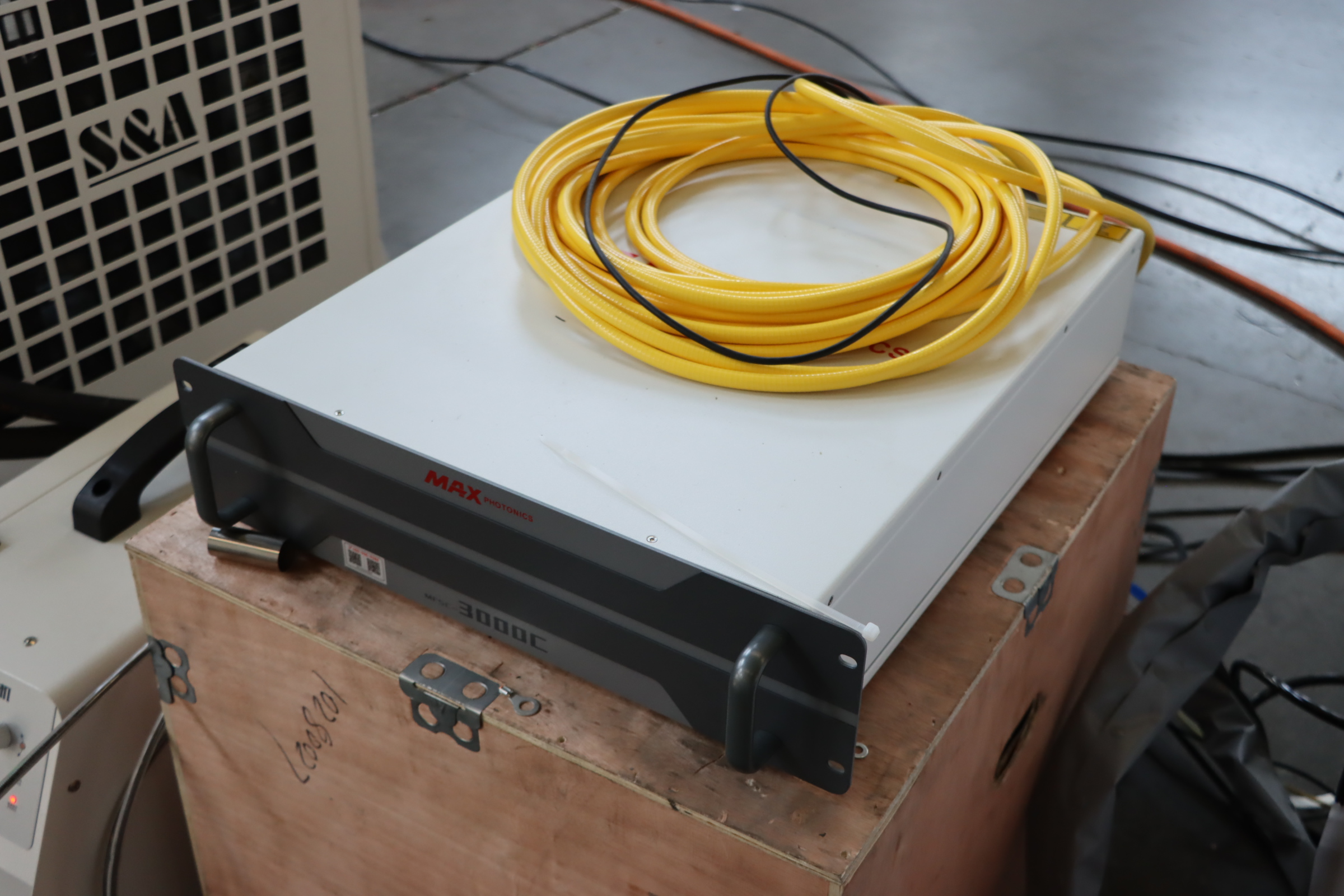
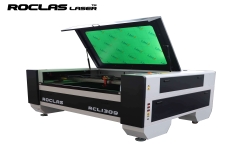
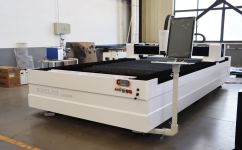
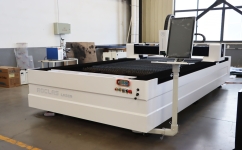
Machine specifications across the current generation illustrate how far the baseline has moved. The table below summarizes representative parameters drawn from ROCLAS's fiber laser platform, which spans entry-level sheet machines through 20 kW thick-plate systems.
| Parameter | Sheet Metal Machine | Tube Cutting Machine |
|---|---|---|
| Working area | 3000×1500 / 4000×2000 / 1500×4000 mm | 1500×4000 mm |
| Laser power range | 1000 W – 20 kW | 1000 – 3000 W |
| Laser source options | Raycus / MAX | Raycus / MAX |
| Control system | Cypcut 3000S | Cypcut 3000S |
| X/Y positioning accuracy | ±0.03 mm | ±0.05 mm |
| X/Y repositioning accuracy | ±0.02 mm | ±0.03 mm |
| Travel speed | 100 m/min | 100 m/min |
| Maximum acceleration | 1.0 G | 1.0 G |
| Maximum tube diameter | — | 220 mm |
| Power requirement | 380 V / 50 Hz | 380 V / 50 Hz |
Two observations follow from these figures. First, the accuracy envelope—±0.03 mm positioning and ±0.02 mm repositioning—is now consistent across power classes, meaning that a shop buying a 20 kW machine for thick plate does not sacrifice the precision needed for thin-gauge cosmetic work. Capability has become additive rather than exclusive. Second, the 100 m/min traverse speed and 1.0 G acceleration are not marketing abstractions; they determine the real cycle-time advantage of a modern gantry over older belt-driven platforms, particularly in nested sheet work where the laser spends a substantial fraction of each cycle in rapid non-cutting moves. On a densely nested 1.5 mm mild steel sheet, the difference between 60 m/min and 100 m/min traverse can translate into double-digit percentage gains in parts-per-hour, which compounds across shifts.
The tube machine column tells a parallel story. A 220 mm maximum tube diameter with ±0.05 mm positioning accuracy covers the overwhelming majority of structural, furniture, and fitness-equipment tube work, and the automatic chuck system reduces the setup burden that historically made tube cutting a specialist's domain. When sheet and tube capability sit under one control system, the scheduling flexibility for a high-mix shop improves materially—a point that matters more than raw speed for subcontractors juggling dozens of small orders.
Technology Application and Brand Case Study
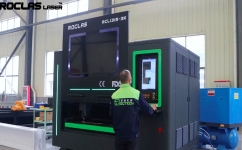
The engineering decisions behind these numbers deserve scrutiny, because the spec sheet alone does not explain why some platforms hold accuracy over years of three-shift operation while others drift. ROCLAS® MACHINERY CO., LTD., a laser equipment manufacturer with more than fifteen years in the field, offers an instructive case. The company's machines use an industrial-grade heavy-duty steel structure processed on CNC five-face machining centers—an approach that prioritizes bed rigidity and geometric consistency over lightweight construction. Imported servo drives and reducers, Schneider electrical components, SMC pneumatics, and igus cable management round out a bill of materials that reflects a conservative, durability-first design philosophy rather than a cost-minimized one.
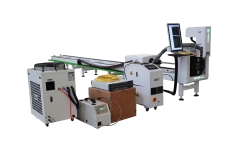
That philosophy extends into application breadth. ROCLAS's portfolio covers single-platform sheet machines, dedicated tube cutters, combined sheet-and-tube systems, five-axis platforms with n×360° infinite rotation for three-dimensional workpieces, and hybrid CO2-plus-fiber machines that process non-metals such as acrylic, wood, and leather alongside metals. The company also offers a steel coil uncoiler integrated with fiber cutting, an configuration aimed at high-volume sheet processing where coil-fed operation reduces power consumption relative to conventional press lines and improves material yield. For shops working with reflective materials, a high-reflectivity suppression module supports stable cutting of 1–2 mm copper and 2–3 mm aluminum—a capability that historically required careful process development.
Quality infrastructure underpins the commercial case. ROCLAS holds ISO 9001 certification, CE compliance, FDA laser product certification for both cutting and engraving configurations, and UL and PDL listings—a certification set that matters for exporters selling into North American and European markets. The company reports more than fifty patents with ten or more added annually, and its R&D team includes engineers with over fifteen years of CNC industry experience. These are the credentials that allow a builder to compete on something other than price in an increasingly crowded field.
Conclusion and Outlook
The direction of travel is clear. Laser power will continue to climb, but the marginal value of additional kilowatts diminishes once a shop can cut its thickest routine work in a single pass. The next competitive frontier lies in automation integration—coil feeding, robotic part handling, automatic nesting, and lights-out operation—and in the software layer that ties these together. Machines like the Cypcut-controlled platforms discussed here are already nodes in larger production networks rather than standalone tools.
For fabricators, the practical implication is that machine selection should be judged against a five-to-seven-year automation roadmap, not a single-year payback calculation. Bed rigidity, control-system openness, and service responsiveness—the unglamorous fundamentals that ROCLAS and comparable builders emphasize—will determine whether a platform can absorb the next generation of automation. The shops that thrive will be those that bought for the workflow they intend to have, not merely the work they have today.
Ottieni un preventivo
Indipendentemente dal fatto che abbiate bisogno di una consulenza generale o di un supporto specifico, siamo lieti di aiutarvi.
Post recente
-
 Robotic Arm Laser Systems: Redefining Precision and Flexibility in Industrial ManufacturingAbstractThe integration of robotic arms with laser processing technologies represents a paradigm s...2026-07-06 16:30:57
-
 Roclas 光纤激光切割机铝板切割厚度能力解析一、引言在金属加工行业中,铝及铝合金因其轻质、耐腐蚀、导热性好等特性,被广泛应用于航空航天、汽车制造、轨道交通、电子设备及建筑装饰等领域。铝材的高反射率特性使其成为激光切割中较难处理的材料之一。许...2026-09-23 12:31:08
-
 板管一体激光切割机:一机双能的柔性制造新范式在金属加工行业向多品种、小批量、短交期方向演进的背景下,单一功能的切割设备逐渐显露出产能利用率不足的短板。板管一体激光切割机通过在同一个加工平台上集成平板切割与管材切割能力,为中小规模制造企业提供...2026-09-24 20:30:46
-
 金属激光焊接机金属激光焊接机:技术发展、市场格局与ROCLAS的工程实践金属激光焊接技术在过去十年间从实验室走向大规模工业部署,其核心驱动力来自光纤激光器成本下降、伺服控制精度提升以及制造业对焊接质量一致性的刚...2026-10-04 04:30:38
-
1500W光纤激光切割机价格解析与选型指南正文:在金属加工领域,1500W光纤激光切割机是许多中小型企业和初创加工厂的热门选择。它既能满足日常碳钢、不锈钢板材的切割需求,又在采购成本和运行费用之间取得了较好的平衡。一台1500W激光切割机...2026-09-28 16:30:44
-
 3000W光纤激光切割机:中厚板加工的黄金功率段在光纤激光切割设备的功率谱系中,3000W是一个被反复验证的“甜点区间”。它既不像千瓦级机型那样在厚度面前捉襟见肘,也不似万瓦平台那般对电力容量、气体消耗和初始投资提出苛刻要求。对于大量以碳钢、不...2026-10-01 08:31:49