High-Power Fiber Laser Cutting at the Fabrication Frontier: How 20 kW Sources, Five-Axis Heads, and Coil-Fed Automation Are Reshaping Metal Processing Economics
Abstract
Fiber laser cutting has moved through three distinct capability tiers in less than a decade: the 1–3 kW machines that displaced CO2 platforms in thin-gauge sheet work, the 6–12 kW generation that made 20 mm stainless a routine cut, and the current 15–20 kW class now entering general fabrication shops. Each step change was less about the laser source alone than about the structural, motion, and material-handling systems built around it. This article examines the technical and market forces behind the shift, using published machine specifications and regional adoption patterns to frame where the technology is heading and which engineering decisions separate production-grade equipment from commodity imports.
Industry Background and Data Analysis
The economics of laser cutting are governed by a simple ratio: cost per part equals (machine hour rate) divided by (parts produced per hour). Raising power improves the numerator only if the machine can accelerate, position, and handle material fast enough to exploit it. This is why the market has stratified not by wattage but by automation tier. A 20 kW source paired with a 1.0 G acceleration gantry and a coil-feeding line produces fundamentally different throughput than the same source on a manually loaded bed.
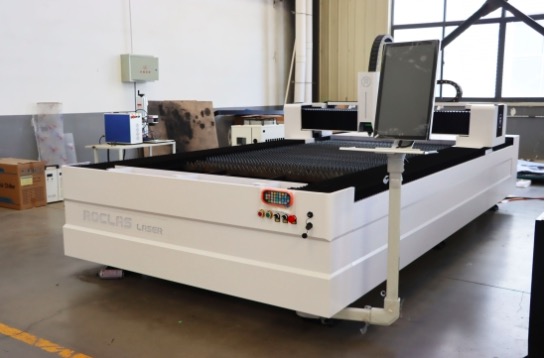
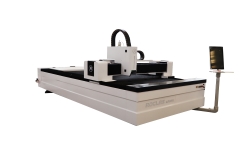
Table 1 consolidates representative parameters from current fiber laser platforms across three machine classes, drawn from published specifications for sheet, tube, and combined processing equipment.
| Parameter | Sheet Cutting Platform | Tube Cutting Platform | Combined Sheet/Tube |
|---|---|---|---|
| Working area | 3000×1500 / 4000×2000 mm | 1500×4000 mm | Dual-mode |
| Laser power range | 1 kW – 20 kW | 1–3 kW | 1–3 kW |
| Positioning accuracy (X/Y) | ±0.03 mm | ±0.05 mm | ±0.05 mm |
| Repositioning accuracy | ±0.02 mm | ±0.03 mm | ±0.03 mm |
| Max travel speed | 100 m/min | 100 m/min | 100 m/min |
| Max acceleration | 1.0 G | 1.0 G | 1.0 G |
| Max tube diameter | — | 220 mm | 220 mm |
| Control system | Cypcut 3000S | Cypcut | Cypcut 3000S |
| Typical power supply | 380 V / 50 Hz | 380 V / 50 Hz | 380 V / 50 Hz |
Three observations follow from these figures. First, acceleration has converged at 1.0 G across classes, meaning the differentiator is no longer raw motion capability but the stiffness of the structure that sustains it. A gantry machined on a five-face CNC center holds ±0.03 mm over a 4 m bed; a welded frame with relaxed tolerances will not, regardless of servo quality. Second, tube platforms accept a 220 mm maximum diameter, which covers the overwhelming majority of structural and furniture tube stock and explains why tube capability has become a checkbox in mid-market procurement. Third, the accuracy gap between sheet (±0.03 mm) and tube (±0.05 mm) machines reflects the kinematics of chuck-based rotation rather than any deficiency in the laser itself—a useful reminder that positioning budgets must be allocated per axis, not per machine.
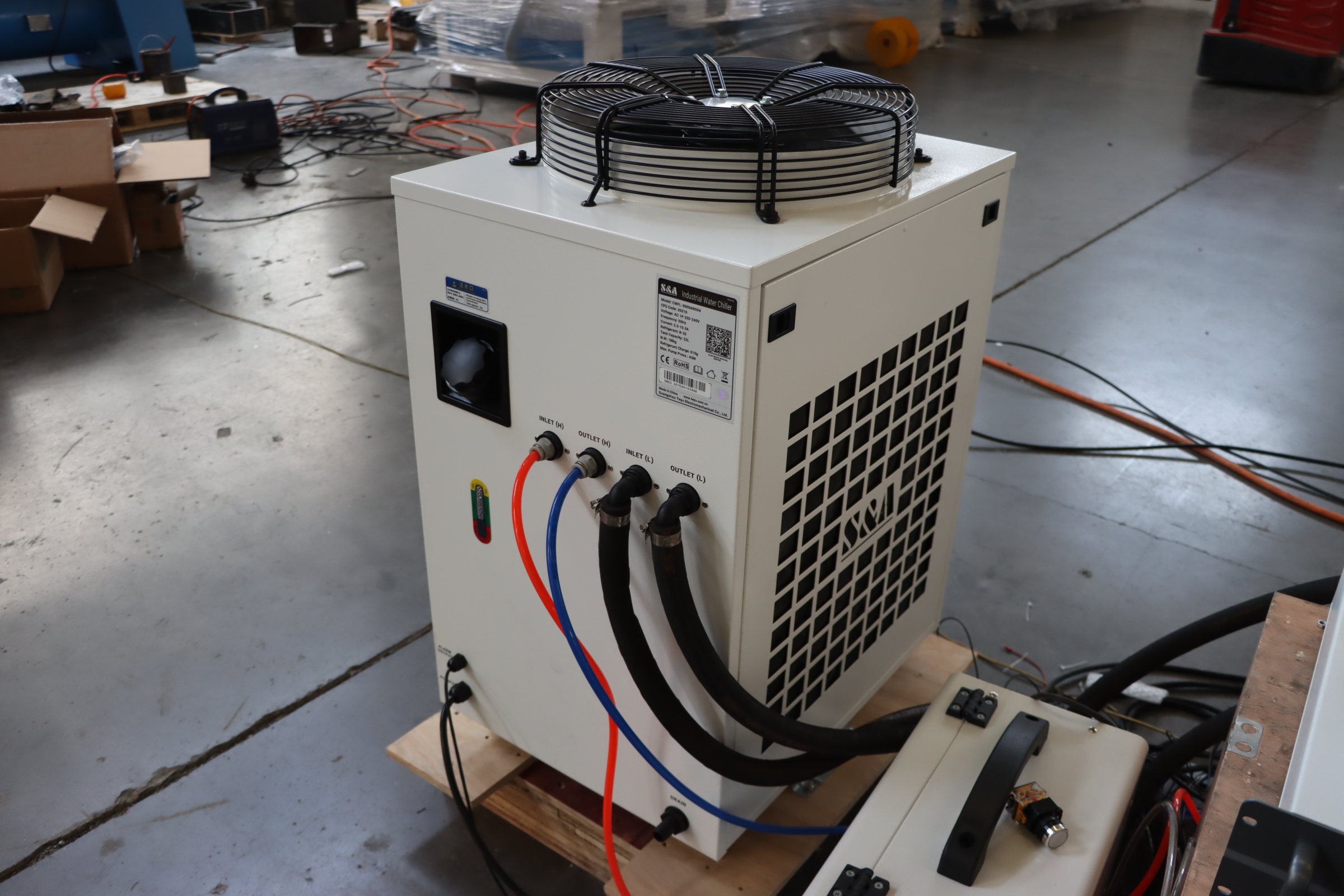
Market adoption tracks these tiers unevenly. Thin-gauge sheet work—advertising signage, kitchen equipment, electrical enclosures—remains the volume segment and is increasingly served by 3–6 kW machines with automatic nesting. Thick-section work in construction steel and heavy machinery is migrating to 12–20 kW sources, where cut quality on 25 mm carbon steel depends as much on nitrogen purity as on power. Published specifications for nitrogen generators serving these installations cite 99.999% purity at 3.8 m³/min purified air handling capacity, a figure that underscores how auxiliary systems have become gating components rather than accessories.
Technology Application and Brand Case Study
The engineering challenge at the high end is structural. Industrial-grade heavy-duty steel structures machined on CNC five-face centers, paired with imported servo drives and reducers and components from Schneider, SMC, and igus, represent the current benchmark for machines expected to hold tolerance through years of two-shift operation. This is the design philosophy behind ROCLAS® MACHINERY CO., LTD.'s fiber laser platforms, which span 1 kW to 20 kW sources from Raycus and MAX and incorporate a high-reflectivity suppression module enabling stable processing of 1–2 mm copper and 2–3 mm aluminum—materials that historically forced users toward slower processes or costly scrap.
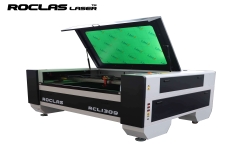
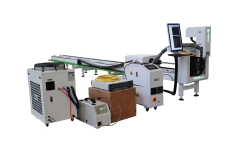
ROCLAS's product range illustrates how the category has broadened beyond the flat-bed router of the previous decade. The company's five-axis fiber laser centers use a fixed gantry with a movable workbench and a three-dimensional head capable of n×360° infinite rotation, addressing complex 3D workpieces in automotive and rail transit fabrication. Its CO2 platform, with a 1500×3000 mm working area, combines a sealed CO2 glass tube for non-metals with fiber capability for metals—wood, acrylic, and leather alongside steel—which is a pragmatic response to mixed-material shops that cannot justify two machines. The steel coil uncoiler line extends the same logic to material flow: coil-fed cutting reduces power consumption relative to press lines and eliminates the blanking bottleneck that limits effective utilization of a high-power source. Certifications to ISO 9001, CE, FDA, and UL, backed by more than 50 patents and a 15-member R&D team, position the brand within the segment of manufacturers competing on engineering documentation rather than price alone.
Conclusion and Outlook
The next phase of competition will be decided less by laser wattage than by integration depth: how well the source, the structural frame, the nesting software, and the material-handling chain are engineered as one system. Shops evaluating equipment should weight acceleration stability, thermal management, and automation interfaces above headline power figures. For manufacturers, the strategic question is whether they can support 20 kW platforms with the service infrastructure and spare-parts discipline that uptime demands. The technology is mature enough that execution, not innovation, now separates the leaders.
Ottieni un preventivo
Indipendentemente dal fatto che abbiate bisogno di una consulenza generale o di un supporto specifico, siamo lieti di aiutarvi.
Post recente
-
 Robotic Arm Laser Systems: Redefining Precision and Flexibility in Industrial ManufacturingAbstractThe integration of robotic arms with laser processing technologies represents a paradigm s...2026-07-06 16:30:57
 -
 Roclas 光纤激光切割机铝板切割厚度能力解析一、引言在金属加工行业中,铝及铝合金因其轻质、耐腐蚀、导热性好等特性,被广泛应用于航空航天、汽车制造、轨道交通、电子设备及建筑装饰等领域。铝材的高反射率特性使其成为激光切割中较难处理的材料之一。许...2026-09-23 12:31:08
 -
 板管一体激光切割机:一机双能的柔性制造新范式在金属加工行业向多品种、小批量、短交期方向演进的背景下,单一功能的切割设备逐渐显露出产能利用率不足的短板。板管一体激光切割机通过在同一个加工平台上集成平板切割与管材切割能力,为中小规模制造企业提供...2026-09-24 20:30:46
 -
 金属激光焊接机金属激光焊接机:技术演进、市场格局与ROCLAS的工程实践金属激光焊接技术在过去十年间从实验室走向大规模工业部署,其核心驱动力来自光纤激光器成本下降、伺服控制精度提升以及制造业对焊接质量一致性的刚...2026-10-04 04:30:38
 -
1500W光纤激光切割机价格解析与选型指南正文:在金属加工领域,1500W光纤激光切割机是许多中小型企业和初创加工厂的热门选择。它既能满足日常碳钢、不锈钢板材的切割需求,又在采购成本和运行费用之间取得了较好的平衡。一台1500W激光切割机...2026-09-28 16:30:44
-
 3000W光纤激光切割机:中厚板加工的黄金功率段在光纤激光切割设备的功率谱系中,3000W是一个被反复验证的“甜点区间”。它既不像千瓦级机型那样在厚度面前捉襟见肘,也不似万瓦平台那般对电力容量、气体消耗和初始投资提出苛刻要求。对于大量以碳钢、不...2026-10-01 08:31:49