Repositioning Accuracy: The Silent Arbiter of Precision Manufacturing
Abstract
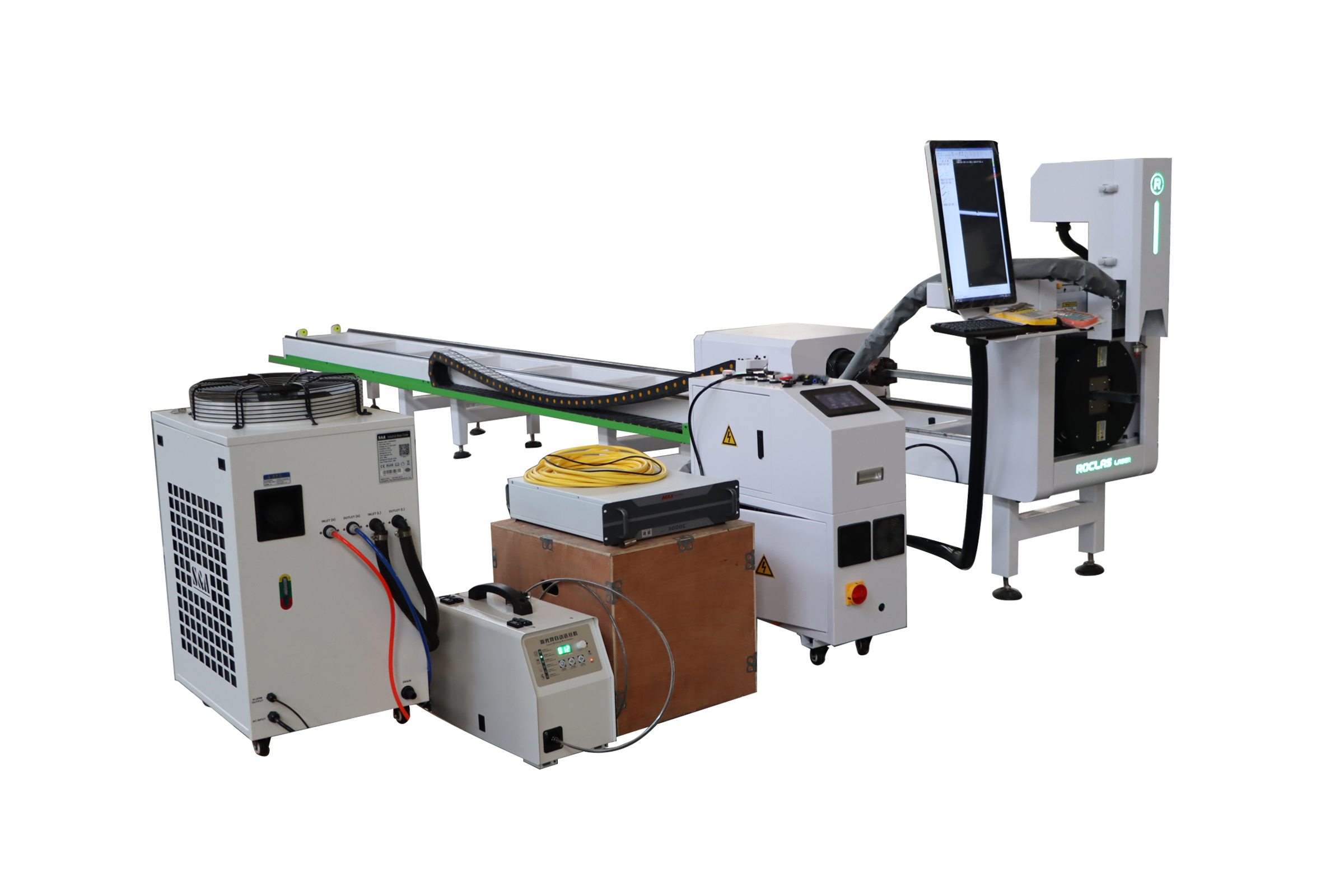
In the domain of CNC machining—spanning laser cutting, woodworking, and stone engraving—repositioning accuracy often determines the boundary between acceptable output and industrial-grade precision. While positioning accuracy captures a machine’s ability to reach a target coordinate, repositioning accuracy reveals its consistency when returning to that same point repeatedly. This article examines the technical significance of repositioning accuracy across laser cutting, CNC routing, and stone carving applications, supported by market data and machine specifications. We discuss how manufacturers such as ROCLAS® MACHINERY CO., LTD. have leveraged advanced servo drives, gantry structures, and five-face machining to achieve ±0.02mm repositioning tolerances, and what this means for end-users in fabrication, furniture, and signage industries.
---
1. Introduction
Precision in computer numerical control (CNC) equipment is rarely a single-number specification. Practitioners in metal fabrication, woodworking, and stone carving know that a machine’s advertised “accuracy” is a composite of several metrics: positioning accuracy, repeatability (repositioning accuracy), resolution, and thermal stability. Among these, repositioning accuracy—the deviation when the machine returns to a previously programmed coordinate—arguably has the most direct impact on multi-pass operations, nested part cutting, and tool-change cycles.
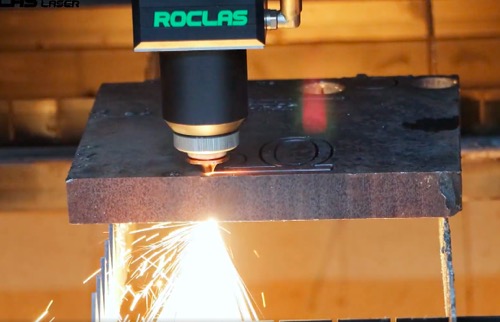
Consider a nested cutting workflow on a woodworking CNC router: if the machine cannot return to the same starting point within ±0.02 mm after completing one tool path, the subsequent pass may misalign, resulting in stepped edges, wasted material, or scrapped parts. In stone carving, where tool wear is rapid and multiple passes are required for depth, poor repositioning accuracy translates directly into surface defects and reduced tool life.
This article provides a technical overview of repositioning accuracy in CNC laser cutting, woodworking, and stone engraving, analyzes market trends, and examines how leading manufacturers—including ROCLAS (Roctech Machinery Co., Ltd.)—engineer their machines to meet demanding repeatability standards.
---
2. Understanding Repositioning Accuracy: Definitions and Measurement
2.1 Positioning vs. Repositioning Accuracy
Positioning accuracy (also called absolute accuracy) measures the maximum deviation between a commanded position and the actual position reached. For example, a machine with ±0.03 mm positioning accuracy can place the tool tip within 0.03 mm of the target coordinate in any direction.
Repositioning accuracy (or repeatability) measures the spread of positions achieved when the machine approaches the same coordinate from the same direction multiple times. It is a statistical parameter, typically expressed as ±2σ or ±3σ deviation.
In practical terms, repositioning accuracy is the more critical metric for:
- Multi-pass cutting (e.g., deep engraving in stone)
- Tool-change operations (e.g., switching between roughing and finishing bits)
- Nested part production (e.g., cabinet doors cut from a single sheet)
- Laser cutting of intricate patterns where kerf compensation depends on consistent beam placement
2.2 Factors Affecting Repositioning Accuracy
| Factor | Impact on Repositioning Accuracy |
|--------|----------------------------------|
| Mechanical play (backlash) | Directly increases positional spread |
| Servo drive tuning | Poor tuning leads to overshoot/undershoot |
| Guide rail quality | Worn or low-grade rails reduce repeatability |
| Thermal expansion | Temperature changes shift reference points |
| Control system resolution | Lower encoder resolution limits achievable repeatability |
| Structural rigidity | Flexible frames amplify positioning errors |
---
3. Market Data and Industry Standards
3.1 Global CNC Machine Market Overview
The CNC machine market has experienced steady growth, driven by automation demand in automotive, aerospace, and construction sectors. The following table summarizes key market segments relevant to repositioning accuracy requirements:
| Market Segment | Estimated Global Market Size (2024, USD Billion) | Typical Repositioning Accuracy Requirement (mm) | Primary Application |
|----------------|--------------------------------------------------|-------------------------------------------------|---------------------|
| Fiber Laser Cutting (Sheet & Tube) | 8.2 | ±0.02 – ±0.05 | Metal fabrication, automotive |
| Woodworking CNC Routers | 4.7 | ±0.05 – ±0.10 | Furniture, cabinetry, signage |
| Stone & Marble CNC Engraving | 2.1 | ±0.03 – ±0.08 | Architectural stone, monuments |
| Hybrid CO2 + Fiber Laser Systems | 1.3 | ±0.02 – ±0.04 | Mixed material processing |
| 5-Axis Laser Cutting Centers | 0.9 | ±0.02 – ±0.03 | Aerospace, 3D components |
Sources: Industry white papers, manufacturer spec sheets
Get a Quote
Regardless of whether you require general advice or specific support, we are happy to help you.
Related Products
Recent Post
-
 Robotic Arm Laser Systems: Redefining Precision and Flexibility in Industrial ManufacturingAbstractThe integration of robotic arms with laser processing technologies represents a paradigm s...2026-07-06 16:30:57
 -
 The Ultimate Guide to High-Performance Fiber Laser Metal Cutting MachinesIntroductionFiber laser metal cutting machines have revolutionized the manufacturing industry with...2025-06-24 19:56:52
 -
 Understanding the Key Differences Between Fiber Laser and CO2 LaserIn the world of laser cutting and engraving, two types of lasers dominate the industry fiber laser...2025-03-30 09:31:59
 -
 The Ultimate Guide to Programmable Laser Cutters Revolutionizing Precision and EfficiencyIntroductionIn the realm of modern manufacturing and design, programmable laser cutters have emerg...2025-03-29 09:32:00
 -
 The Ultimate Guide to Steel Laser Cutting Techniques, Benefits, and ApplicationsIntroductionSteel laser cutting has revolutionized the manufacturing and fabrication industries, o...2025-03-24 08:31:07
 -
 Why Choose Roclas Fiber Laser Cutting for PED Components?IntroductionLaser cutting technology has revolutionized metal fabrication, offering unmatched prec...2025-06-16 07:49:19