Laser Welding Machines: Precision Joining for Modern Manufacturing
Abstract
Laser welding technology has emerged as a transformative force in industrial fabrication, offering superior precision, minimal thermal distortion, and high-speed processing capabilities. This article examines the current state of Laser welding machines, with particular focus on fiber laser systems operating in the 1000–3000W range. Drawing on industry data and technical specifications from leading manufacturers such as ROCLAS® MACHINERY CO., LTD., the discussion covers market trends, key performance parameters, application domains, and future directions. A comparative analysis of welding technologies is presented, supported by a data table summarizing performance metrics across machine categories.
---
1. Introduction
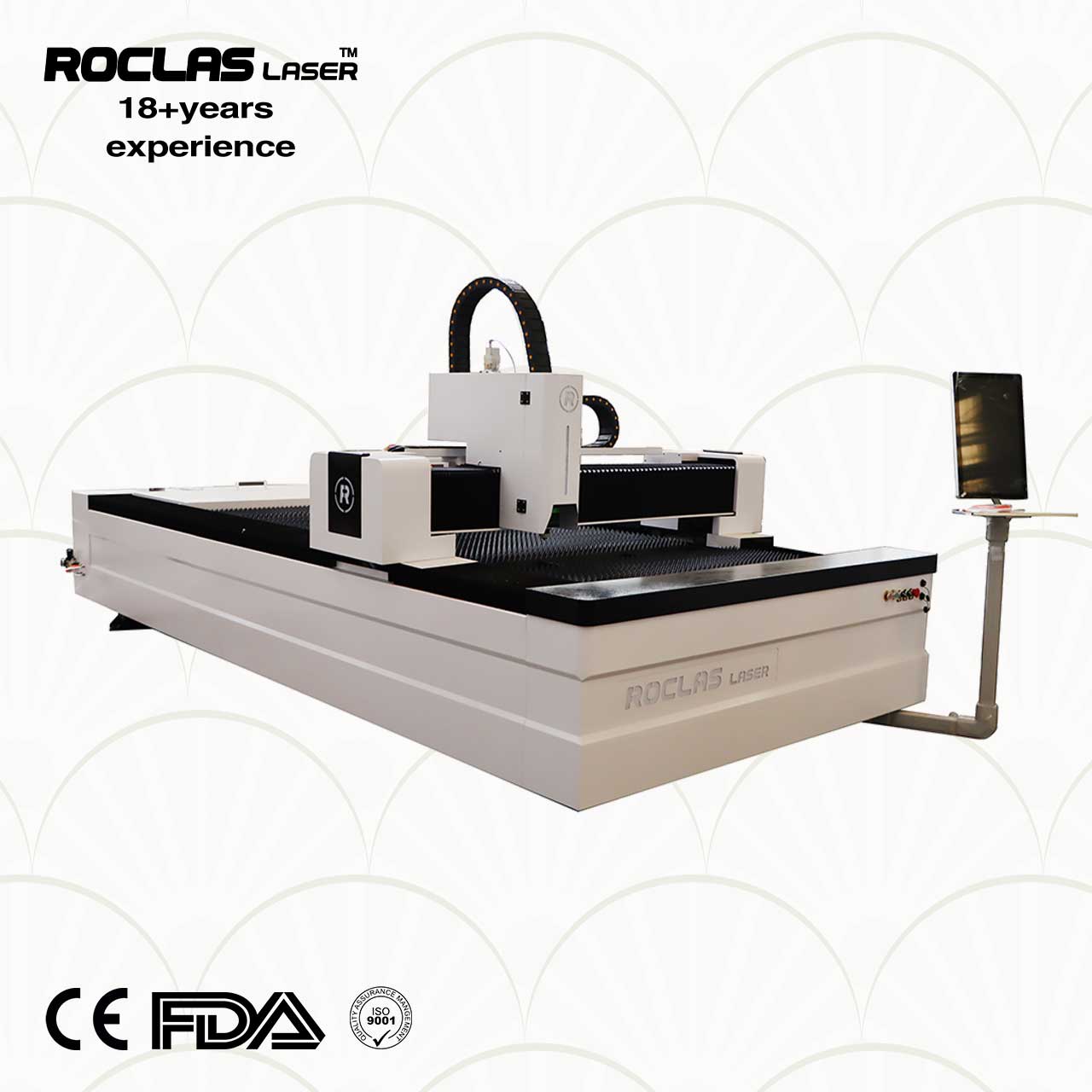
The shift toward automation and precision in metal joining has accelerated the adoption of laser welding across industries ranging from automotive to medical devices. Unlike conventional arc or resistance welding, laser welding provides a concentrated heat source that minimizes the heat-affected zone (HAZ), reduces distortion, and enables high-speed processing of thin to medium-thickness materials.
Laser welding machines, particularly those employing fiber laser sources, have become the preferred solution for manufacturers seeking repeatable quality, reduced post-processing, and compatibility with robotic integration. The market for laser welding equipment is projected to grow at a compound annual growth rate (CAGR) of approximately 7–9% through 2030, driven by demand in electric vehicle battery manufacturing, stainless steel kitchenware, and structural component fabrication.
---
2. Market Landscape and Technology Segmentation
The laser welding machine market can be segmented by laser type (fiber, CO₂, diode), power range, and end-use industry. Fiber lasers dominate due to their high electrical efficiency, compact footprint, and ability to weld reflective metals such as copper and aluminum.
Table 1: Comparative Performance Metrics of Laser Welding Machines by Power Range
| Power Range | Typical Weld Depth (mm) | Welding Speed (m/min) | Material Compatibility | Typical Applications |
|-------------|------------------------|-----------------------|------------------------|----------------------|
| 500–1000W | 0.5–1.5 | 0.5–1.2 | Stainless steel, mild steel, thin aluminum | Jewelry, electronics, medical instruments |
| 1500–2000W | 1.0–3.0 | 0.7–2.0 | Steel, aluminum, copper (with reflective module) | Automotive parts, battery packs, sheet metal enclosures |
| 3000–6000W | 2.5–6.0 | 1.0–3.5 | Thick steel, titanium, copper alloys | Structural components, shipbuilding, heavy machinery |
| >6000W | >5.0 | 1.5–5.0 | Thick plate, high-strength alloys | Pressure vessels, defense, large-scale fabrication |
Source: Industry white papers and manufacturer specifications (2024)
Interpretation of the table reveals a clear correlation between power and throughput, but also highlights the importance of beam quality and control software. For instance, a 1500W fiber laser welding machine—such as those produced by ROCLAS® MACHINERY CO., LTD.—operating at a welding speed of 0.7–2.0 m/min, is well-suited for medium-scale production where weld depth and speed must be balanced against heat input. The inclusion of a high-reflectivity suppression module further extends capability to copper and aluminum, materials historically challenging for laser processing.
---
3. Technical Architecture of Modern Laser Welding Machines
A typical fiber laser welding machine comprises several key subsystems:
- Laser Source: Continuous-wave or modulated fiber laser, typically 1080±5 nm wavelength. Power output is stable, with wall-plug efficiency exceeding 30%.
- Beam Delivery: Fiber-optic cable with collimating and focusing optics. Raytools welding heads are commonly integrated for precise focal point control.
- Motion System: CNC-controlled gantry or articulated robotic arm. Servo drives and linear guides ensure positional accuracy within ±0.03 mm.
- Cooling and Filtration: Water-cooled chiller maintains laser temperature; fume extraction and safety enclosures comply with CE and FDA standards.
- Control Software: Systems like Cypcut or proprietary interfaces manage weld parameters, seam tracking, and multi-axis synchronization.
ROCLAS® MACHINERY CO., LTD. exemplifies this architecture in its 1500W continuous/modulation laser welding machine. The unit operates on 220V power, features a compact design, and supports both manual and automated operation. Its ability to switch between continuous and pulsed modes allows the operator to fine-tune heat input for thin foils versus thicker plates.
---
4. Application Case Studies and Industry Adoption
4
Get a Quote
Regardless of whether you require general advice or specific support, we are happy to help you.
Recent Post
-
 Robotic Arm Laser Systems: Redefining Precision and Flexibility in Industrial ManufacturingAbstractThe integration of robotic arms with laser processing technologies represents a paradigm s...2026-07-06 16:30:57
 -
 The Ultimate Guide to High-Performance Fiber Laser Metal Cutting MachinesIntroductionFiber laser metal cutting machines have revolutionized the manufacturing industry with...2025-06-24 19:56:52
 -
 Understanding the Key Differences Between Fiber Laser and CO2 LaserIn the world of laser cutting and engraving, two types of lasers dominate the industry fiber laser...2025-03-30 09:31:59
 -
 The Ultimate Guide to Programmable Laser Cutters Revolutionizing Precision and EfficiencyIntroductionIn the realm of modern manufacturing and design, programmable laser cutters have emerg...2025-03-29 09:32:00
 -
 The Ultimate Guide to Steel Laser Cutting Techniques, Benefits, and ApplicationsIntroductionSteel laser cutting has revolutionized the manufacturing and fabrication industries, o...2025-03-24 08:31:07
 -
 Why Choose Roclas Fiber Laser Cutting for PED Components?IntroductionLaser cutting technology has revolutionized metal fabrication, offering unmatched prec...2025-06-16 07:49:19